Biz doğulular, batı medeniyetine ömür biçmeyi pek bir severiz. Özellikle Türkiye'deki yaygın söylem, "Abicim adamlar bitmiş, insanlık ölmüş, bunların çöküşü yakındır!" kıvamında sürüp gider. Çoktan çökmüş bir medeniyetin varisleri, kesif sigara dumanıyla kaplı kahve köşelerinde, hakim gücün ölüm tarihine yönelik fallar açmaya bayılır…
Lakin doğrudur, Batı, özellikle insani planda çözülme sürecine girmiştir, bunu kendileri de kabul eder haddi zatında. Ve belki de bu yüzden, en iyi olduğu alanda, bilim-fen sahasındaki hakimiyet koşusunu dört nala sürdürüyor; mezarlıktan geçerken ıslık çalan adamın ruh haleti içersinde. Yine de çöküş mukadder. Zira Batı olarak isimlendirdiğimiz bu hakim güç, bilim teknoloji alanında, yaratanın emirleri doğrultusunda kafa yormaya devam ederken, bir başka emrini kulak ardı edip, 'insani olanla' göbek bağını kesmiş ve de bu durumu içine sindirmiş görünüyor. Bu girizgahı neden yaptım derseniz, sadede geleyim. Geçtiğimiz hafta sonu Hannover'de biten CEBIT İletişim fuarının havasını soluduk. Elin oğlu, almış başını gitmiş. Saç teline varıncaya kadar gösteren yüksek çözünürlüklü televizyonlardan, bir zamanlar uzay yolu benzeri dizilerin senaristlerinin hayal gücünü gölgede bırakacak özelliklere sahip cep telefonlarına varıncaya kadar, akla ne geliyor ya da gelmiyorsa… CEBIT, bir bakıma, bugünkü hakim medeniyetin showroom'u; teknoloji parlak, keyifler gıcır, tüketim had safhada. Ne kadar üretim, o kadar tüketim, eşittir; mutlu kitleler. Lakin bir sorun var. Bu mutlu, yüzü gülen kitleler, nedense dünya haritasının genellikle kuzey ve batı alanlarında odaklanmış; "Geri kalanların canı cıksın!" zihniyeti, pis pis sırıtıyor. Batının payına refah ve teknoloji, Doğununkine ise, intihar saldırıları, terör, diktatörler, fakirlik ve açlık düşüyor. Ve acı olan şu ki, tok, açın halinden anlamadığı gibi, batı da, doğulunun, kendisini bombayla havaya uçurmasını, genlerindeki bozukluk (!) ya da kültüründeki yozlaşmayla açıklamaya çalışıyor, bir de buna kendisini inandırıyor. Keşke ay yüzeyine devasa bir megafon yerleştirsek de, dünyanın zenginlerine seslenebilsek: "Kendinizi kandırmayın beyler! Bu denklem bozulmadıkça, yerküre huzur bulmayacak!"
Yazının başındaki 'içine sindirme' meselesine dönelim. Hollanda kanallarından birinde, genç mucitlerle ilgili, takdire şayan bir program izliyorum. Mini rüzgar santraliyle cep telefonu şarj eden bir genç çıkıyor, bravo diyoruz. Ardından takdire şayan bir başkası. Ve finalde de bir başka genç. O da ne? Bozulmuş yiyeceklerdeki canlı kurtçukları topluyor, yıkıyor, süzgeçten geçiriyor, fırında kızartıp, kurutulmuş meyve özleriyle, çiğköfte misali yoğurup, bu karışımdan kurabiye yapıyor! "Dur bakalım işin sonu nereye varacak diyoruz?" Program sunucusu ve kurtlu kurabiyenin mucidi, kurabiyelerle sokağa çıkıp, millete tattırıyorlar bu 'icadı'. Yorumlar olumlu, tadı yerindeymiş. Neyse efendim, ne diyor biliyor musunuz bu genç mucit? "Bu kurabiyeyi, Afrika'daki açlık çeken ülkeler için yaptım. Oralarda kuraklıktan dolayı bir sürü böcek türü var. Belki o böcekleri bu şekilde değerlendirebilirler." Sunucu da gayet mağrur bir şekilde onaylıyor genç mucidi. Vicdanlar rahat. Eee boru değil yani, Afrika'daki açlığa sorun bulundu…
Allah müstahakınızı versin emi! Açlara börtü böcek yiyebilirsiniz demenin ayıbı, gafı bir yana, bu durumdan 'Açlık sefalet bu adamların kaderi. Ama bakın biz duyarlı batılılar bu işe de kafa yoruyoruz" türünden bir normalleştirme çıkarmak, insanlığın gidişatı açısından kahredici bir durum… İslam peygamberi ise noktayı asırlar önce koymuş: "Komşusu açken, kendisi tok olan bizden değildir." Siz isterseniz buradaki 'biz'i, 'insan' olarak da algılayabilirsiniz... ve yazının finali, yine bir Hollanda dergisinin kapağından: "Eğer tüm İnsanlar, ortalama bir Hollandalı kadar tüketim yapsa, insanoğluna iki dünya bile yetmez!"
12 Mart 2008, Çarşamba, Zaman Avrupa
Yazının orijinal linki için tıklayınız
Bir önceki menüye dönmek için tıklayınız
Ana menüye dönmek için tıklayınız
21 Haziran 2009 Pazar


Demek İslam hakkında film çevirmek istiyorsunuz?
Garip ama gerçek. Ve hatta trajikomik. Kendisi 'küçük' olsa da, yetiştirdiği sanatçıları, sporcuları ve Kıta Avrupasının aksine çok uzun bir süre içinde barındırdığı 'çok kültürlü' ve güler yüzlü yaşam tarzıyla dünya kamuoyunda bir zamanlar 'büyük' bir imajı olan Hollanda, adeta kendi ayağına kurşun sıkıyor.
Tabiî ki tahmin ettiniz; lafı yine Kuran karşıtı filmi ile saatli bomba gibi ortalıkta dolaşan Hollandalı politikacı Geert Wilders'a getireceğiz. Gönül isterdi ki Hollanda'dan başka meseleleri kalemimize dolayalım ama, zat-ı muhterem, pervaneye dolanmış yosun gibi, 'köşemizin' yol almasını engelliyor. İnsan soramadan edemiyor; Hollanda'nın İslam ile derdi nedir? Kimse ifade hürriyeti gargarası yapmasın. Ortada ne entelektüel bir tartışma var ne de haklı gerekçelere ve olan biteni anlama isteğine dayalı bir sorgulama. Neredeyse son bir yıldır, sistematik olarak Hollanda medyası, Kuran ve İslam'a bel altı vuruşlar yapan seslere yardım ve yataklık yapmakta bir beis görmüyor. El Kaide bombalarına hedef olan Amerika, İngiltere ve İspanya'da bile duyulmayan argümanlar, Hollanda medyasında cirit atıyor. Anadolu'da dedikleri gibi, "Ayının 40 hikayesi var, 40'ı da armut üzerine." Sanat mı konuşuluyor, koy bir tutam 'radikal İslam'; spor mu konuşuluyor, ekle bir ölçek 'İslami terör'. Yapmayın beyler Allah aşkına, derdiniz nedir? Sürekli "Faslı gençler şöyle, Türk gençleri böyle" fasılları. Sıkılmadınız mı aynı plağı döndürmekten? Dünya'nın her yerinde aynı yaş dilimindeki gençlerin yaşadıkları benzer kimlik-ergenlik sorunları, neden buradaki göçmen çocuklarını 'potansiyel radikal' yapıyor?
Ha, radikal yok mu, elbette vardır. Radikali olmayan ülke mi var? Kiminde 'dinci radikal' var, ortalığı ateşe verir, kiminde 'laik radikal' var, iktidarı hapsetmeye soyunur! Suç şahsidir ve genelleştirilemez. Kim suç işlerse, adalet yakasına yapışır. Bu kadar polis, istihbarat boşuna mı besleniyor? Neden ülkenin aydınları, yazar çizer takımı, siyasileri, kitlelere yeni ufuklar açmak yerine, polisliğe soyunuyor? Bu panik havasının sebebi nedir? Hollanda, vatandaşlarının bilmediği bir tehditle mi karşı karşıya? El insaf yahu, 'İslami terör' olarak isimlendirdiğiniz olguya, Müslüman Türkiye bile hedef oldu da, Afganistan'da savaşan güçleri olan Hollanda'ya ne oluyor? Somut bir tehlike varsa halkı bilgilendirin. Yok değilse, bırakın insanlar gerçek gündemlerine, geçim dertlerine kafa yorsunlar. Ha, illa 'İslam' ya da 'Müslümanlar' ile ilgili kitap yazıp, film mi çevirmek istiyorsunuz? O zaman bırakın 'İslam'da ezilen kadın', 'İslam peygamberinin çok evliliği' gibi çiğnene çiğnene cılkı çıkmış mevzuları da, 'Batının vahşi sömürgeciliğinin İslam coğrafyasındaki yıkıcı etkisi ve bunun günümüze yansımaları' ya da ne bileyim 'Batının İslam coğrafyasında destek verdiği diktatörler ve bu desteğin nedenleri' gibi 'el yakan', kafa konforunuzu bozacak mevzulara eğilin. Ha, "Yok kardeşim, biz, nasıl Küba denince Castro, Çin denince Mao akla geliyorsa, Hollanda denince de Geert Wilders akıllara gelsin istiyoruz" diyorsanız, yolunuz açık olsun. 'İfade hürriyeti' klimasının serinliğinde, elinizde patlamış mısır, Wilders'ınızın filmciğini temaşa edin.
20 Mart 2008, Perşembe, Zaman Avrupa
Yazının orijinal linki için tıklayınız
Bir önceki menüye dönmek için tıklayınız
Ana menüye dönmek için tıklayınız
16 Haziran 2009 Salı
Clinton: Promoting Dialogue is up to Turkey
In promoting inter-cultural dialogue many duties await Turkey, former US President Bill Clinton said. The country's identity and location will play a crucial role for the dialogue to yield results, Clinton said. "The only thing we need is to have talks. We need to talk in the US and in the international  arena."
Clinton, in the last day of a three-day sessions on the Gobal Initiative, shared his assessments with Zaman, reassuring his support for Turkey's European Union (EU) membership. He carefully followed the speech Turkish Prime Minister Recep Tayyip Erdogan delivered in the panel titled," How can civilizations talk with each other?” Clinton said, "Mr. Erdogan makes considerable efforts in promoting dialogue." "Could you yield the result that you expected from this initiative organized simultaneously with the United Nations (UN) Summit? And what was the difference of this initiative?” He was asked.
"This is our first year and I am very pleased with it. As you see, we just don't talk here, the participants make their contributions in cash without delay," former US president responded as he pointed out the $1,250 million financial aid collected in three days. This amount will be used in 100 different fields regarding global problems. The Initiative's goal, former president acknowledged, is to form a speech platform among the cultures, nations and religions. "The only thing we need to do is to talk. We need to talk in the US and in the international arena. And we are talking here. This is our biggest gain." The initiative will continue in the next decade as well, he said. "I believe at the end of the next decade, the world will be a more livable place." When asked, "What do you think is the most crucial point of this initiative?" Clinton replied, "We gathered people from nearly all the religions and political opinions under a single roof and took promises from them about certain issues." At the end of the very first summit, the Initiative took concrete steps for the development of a transportation system in Sri Lanka, the development of a justice system in Peru and Colombia, and providing credits for small-scale entrepreneurs. Recalling the first monetary donation in the summit bearing his name, "This is the power of the public and non-governmental organizations. The sprit of the era requires this. For instance, we may not be pleased with the US President George W. Bush’ actions; however, we can solve many problems by organizing the sources, energy and the public power we have."
Clinton closes the session with verses
Clinton addressed a group of 1,000 people including Hollywood starts like Brad Pitt, Angelina Jolie, Chris Tucker, Barbara Streisand, Leonardo DiCaprio and politicians such as Gerry Adams, the leader of Sinn Fein, which is the political extension of the Ireland Liberation Organization, US African American Democrat leader Jesse Jackson, and his former Vice President Al Gore in his closing speech. The main part of Clinton’s speech was based on the concept of inter-religious dialogue. He dwelled upon the need to draw a bold line between the fight against extremism and religions. Concepts of peace and harmony are the basis of Islam and differences should not create conflict but should be a source of richness, Clinton told. "As a matter of fact, Islam's holy book Qur'an says Allah created all of you differently so that you can know and be friends with each other, not to fight with each other,,” said Clinton, which gave him a thunderous applause from the people in the room. “All the people in the world should join hands with each other and fight against problems such as extremism, poverty, lack of education, unfair distribution of income and AIDS."
200 journalists followed the initiative
Two hundred press members followed the Clinton Global Initiative, which lasted for three days and nearly 1,000 participants attended. Zaman was the only Turkish newspaper that followed the summit from the beginning to the end, in which a restricted number of journalists were accredited. In the first summit of the initiative, issues such as the "fight against poverty," "religion, conflict, compromise," "climate change" and "governance" were discussed. Every year global problems will be laid down on the table under four subject headings.
 arena."
Clinton, in the last day of a three-day sessions on the Gobal Initiative, shared his assessments with Zaman, reassuring his support for Turkey's European Union (EU) membership. He carefully followed the speech Turkish Prime Minister Recep Tayyip Erdogan delivered in the panel titled," How can civilizations talk with each other?” Clinton said, "Mr. Erdogan makes considerable efforts in promoting dialogue." "Could you yield the result that you expected from this initiative organized simultaneously with the United Nations (UN) Summit? And what was the difference of this initiative?” He was asked.
"This is our first year and I am very pleased with it. As you see, we just don't talk here, the participants make their contributions in cash without delay," former US president responded as he pointed out the $1,250 million financial aid collected in three days. This amount will be used in 100 different fields regarding global problems. The Initiative's goal, former president acknowledged, is to form a speech platform among the cultures, nations and religions. "The only thing we need to do is to talk. We need to talk in the US and in the international arena. And we are talking here. This is our biggest gain." The initiative will continue in the next decade as well, he said. "I believe at the end of the next decade, the world will be a more livable place." When asked, "What do you think is the most crucial point of this initiative?" Clinton replied, "We gathered people from nearly all the religions and political opinions under a single roof and took promises from them about certain issues." At the end of the very first summit, the Initiative took concrete steps for the development of a transportation system in Sri Lanka, the development of a justice system in Peru and Colombia, and providing credits for small-scale entrepreneurs. Recalling the first monetary donation in the summit bearing his name, "This is the power of the public and non-governmental organizations. The sprit of the era requires this. For instance, we may not be pleased with the US President George W. Bush’ actions; however, we can solve many problems by organizing the sources, energy and the public power we have."
Clinton closes the session with verses
Clinton addressed a group of 1,000 people including Hollywood starts like Brad Pitt, Angelina Jolie, Chris Tucker, Barbara Streisand, Leonardo DiCaprio and politicians such as Gerry Adams, the leader of Sinn Fein, which is the political extension of the Ireland Liberation Organization, US African American Democrat leader Jesse Jackson, and his former Vice President Al Gore in his closing speech. The main part of Clinton’s speech was based on the concept of inter-religious dialogue. He dwelled upon the need to draw a bold line between the fight against extremism and religions. Concepts of peace and harmony are the basis of Islam and differences should not create conflict but should be a source of richness, Clinton told. "As a matter of fact, Islam's holy book Qur'an says Allah created all of you differently so that you can know and be friends with each other, not to fight with each other,,” said Clinton, which gave him a thunderous applause from the people in the room. “All the people in the world should join hands with each other and fight against problems such as extremism, poverty, lack of education, unfair distribution of income and AIDS."
200 journalists followed the initiative
Two hundred press members followed the Clinton Global Initiative, which lasted for three days and nearly 1,000 participants attended. Zaman was the only Turkish newspaper that followed the summit from the beginning to the end, in which a restricted number of journalists were accredited. In the first summit of the initiative, issues such as the "fight against poverty," "religion, conflict, compromise," "climate change" and "governance" were discussed. Every year global problems will be laid down on the table under four subject headings.
19 September 2005, Monday
Ali Çimen, New York
Heinz Kramer & Harald Müller: "Kıbrıs'ta çözümsüzlük AKP'ye pahalıya patlar"
 Türkiye'nin Kıbrıs görüşmeleri üzerinden ilerlemeye çalıştığı AB üyeliği hedefi, uzun süredir bir numaralı gündem maddesi olma özelliğini sürdürüyor. Önce Alman Hıristiyan demokratlarının lideri Angela Merkel'in ziyareti ve Türkiye'deki AB isteklilerinin ümitlerini kıran 'ayrıcalıklı ortaklık' önerisi geldi. Ardından Alman Şansölyesi ve sosyal demokratlarının lideri Gerhard Schröder'in 'AB yolunda tam destek' içerikli ziyareti. Alman siyasetçiler, Türkiye'nin üyeliği konusunda yekpare bir tutuma sahip görünmüyor. Almanya'nın önde gelen iki uluslararası ilişkiler uzmanı Profesör Harald Müller ve Profesör Heinz Kramer, Türkiye-AB ilişkilerini ve Türkiye'nin 'model ülke' potansiyelini Zaman'a değerlendirdi.
Kıbrıs meselesinde çözüme yaklaşılmış gibi. Çözüm ve çözümsüzlük durumlarında neler olabilir? Bunun Türkiye'nin iç ve dış politikasında yansımaları nasıl olacaktır?
Harald Müller: Türkiye'nin AB'ye girişi önündeki engellerden biri kalkmış olacak. Bu mesele ortada durduğu sürece üyelik söz konusu olamaz.
Heinz Kramer: 1 Mayıs'ta sorun çözülürse, Türkiye'nin AB Komisyonu'ndan alacağı ve üyelik müzakerelerini başlatması beklenen raporun olumlu olması ihtimali artar. Çözüm olmazsa, burada suçlanacak kesim önemli olacak. Türkiye sorumlu olursa, söz konusu rapor olumsuz olacak ve AB içindeki Türkiye karşıtlarının da eli güçlenecek, Türkiye'nin üyeliği belirsiz bir tarihe ertelenecek. Bu, politik geleceğini AB politikasındaki başarıya kilitlemiş AKP hükümetinin pozisyonunu zayıflatacak. Hükümet üzerindeki Kemalist baskı artacaktır. Türkiye, 1990'ların başından itibaren yaşanan 'kültür savaşı' günlerine geri dönebilir. AKP'nin bu iç mücadeleyi kazanma şansı, o günkü Refah Partisi'nden daha yüksek olmayacaktır.
Türkiye'nin AB üyesi olması gerektiğine inanıyor musunuz?

Harald Müller: Evet, Türkiye, asırlardır Avrupa sisteminin oyuncusu. AB standartlarını yakalamaya çalışan ve modernleşme konusunda büyük bir gayret sarf eden tek Müslüman ülke. Bu çabalar bir süre daha sürecek. Bu üyelik yakın zamanda gerçekleşmeyecek. Ama şartlar tamamlandığında, üyeliği geciktirmenin manası da olmayacak. Türkiye'nin üyeliği, AB'nin İslam karşıtı bir blok olmadığı mesajının verilmesi açısından önemli. Türkiye'nin katılmasıyla, AB'nin, Avrupa açısından en önemli jeopolitik coğrafya olan Ortadoğu'daki varlığı da güçlenecektir.
Heinz Kramer: Ne Türkiye ne de diğer bir aday üye, tam üye olmalı. Genişleme AB için varoluş sorunu değil. AB şu anki durumuyla, Türkiye ya da diğer adaylardan biri olmaksızın da Avrupa ve dünyadaki önemli siyasal aktörlerden biri olmaya devam edebilir. Bu sorunun cevabını sadece politik olarak, üyelik müzakerelerinin ardından verebiliriz. Burada hem aday ülke hem de AB açısından düşünülmeli. Aday hazır olabilir ama AB yeni üyenin getireceği yükü omuzlamaya hazır mı? Türkiye için bu kararın bu on yıl içinde verilmesi gerekecek. Burada da sorulması gereken soru, Türkiye'nin üye olup olmaması değil, o zamanki şartlar altında Avrupa'nın ve dünyanın karşı karşıya olduğu politik, ekonomik ve küresel şartlar altında Türkiye'nin üyeliğinin ne kadar yararlı olacağıdır. Türkiye o dönemde AB müktesebatına hazır ise, yani bugünden daha fazla Avrupalılaştırabildiyse, üyeliği reddetmenin nedeni olmayacaktır.
Bazı çevrelerde, Türkiye'nin AB tarafından reddedilmesi durumunda Türk halkının hayal kırıklığına uğrayacağı, içine kapanacağı ve bunun sonucunda Türkiye'nin AB karşıtı bir politikaya saparak, AB'ye alternatif oluşumlara yelken açacağı senaryoları yazılıyor. Bunları gerçekçi buluyor musunuz?
Harald Müller: Hayal kırıklığı, reddetme ve bunun sonucunda Türk kimliğine yapılan vurgunun artması, buna paralel olarak da Ortadoğu ve Asya'ya yöneliş olabilir.
 Heinz Kramer: Bu ihtimal dışı değil, ama ben mümkün görmüyorum. Türkiye zaten AB'ye güçlü bir şekilde bağlı. Bu bağlantılar Türkiye'nin aleyhine de değil. Neden bunlardan vazgeçilsin ki? Böyle olsa bile, böyle bir manevranın Türkiye'ye çıkaracağı bedel ne olacak? Bu AB karşıtı ittifakta Türkiye'nin ortakları kim olacak, İran, Rusya, Irak, Pakistan, Arap ülkeleri ve hatta Amerika mı? Bu ülkelerin Türkiye ile AB karşıtı bir ittifaka girmesinden ne gibi bir kazançları olabilir ki? Ve olsa bile bu AB'yi ne kadar etkiler?
Alman Hıristiyan demokratlarının lideri Angela Merkel'in 'ayrıcalıklı ortaklık' önerisini mantıklı ve uygulanabilir buluyor musunuz?
Harald Müller: Bence işe yaramaz. Türkiye'ye üyelik sözü verildi. Ve bunun için gerekli sebepler de var. Bundan geri adım atmak, hem Türkleri yaralayacak hem de Avrupa'nın iddia ettiği gibi evrensel değerleri yaygınlaştırmaya çalışan değil, kültürel bir oluşum olduğunu gösterecektir.
Heinz Kramer: Eğer üyelik müzakereleri başarısız olursa, 'ayrıcalıklı ortaklık' bir alternatif olabilir. Bununla birlikte bu ihtimal, müzakere sürecinin parçası olan ciddi sorunlar göz önüne alındığında, tamamen ihtimal dışı bırakılmamalı. Hiç kimse daha bugünden, Türkiye ya da AB'deki gelişmelerin, taraflardan birinin ya da diğerinin, adaylığı, artık işlevsel ya da arzu edilebilir bulmayacağı bir noktaya gelmeyeceğini garanti edemez.
Avrupa'daki siyaset yapıcıların çoğu Türkiye'nin adaylığına Avrupa'nın güvenlik kaygıları ya da diğer İslam ülkelerine model gösterilmesi noktasından yaklaşıyor. Bu tespite katılır mısınız?
Harald Müller: İkinci sorunuzda buna kısmen cevap vermiştim. Evet, hem İslam ülkelerine bir model sunulmalı hem de Türkiyesiz bir Avrupa eksik olacaktır.
Heinz Kramer: Kesinlikle doğru. Türkiye’nin üyeliği, AB'ye geniş anlamda güvenlik politikaları haricinde bir kazanım sağlamayacaktır.
Amerikalı siyasetçilerin demeçlerinde ve en son olarak Alman Dışişleri Bakanı Joschka Fischer'in 7 Şubat'ta Münih'teki Güvenlik Politikaları Konferansı'nda net olarak dile getirdiği gibi, bazı çevreler sürekli olarak Türkiye'yi kültürler, dinler, daha net bir ifadeyle çatışma görüntüsü veren transatlantik ve İslam ülkeleri blokları arasında bir köprü olarak lanse ediyor. Türkiye'nin böyle bir potansiyeli var mı?
Harald Müller: Türkiye'nin AB'ye başarılı bir şekilde dâhil olması, Müslüman bir ülkenin de liberal değerleri kucaklayacağını ve özünü kaybetmeden gerçek manada demokrasiyi hayata geçirebileceğini gösterecektir. Şüphesiz ki bu diğerleri için de model etkisi yaratacak ve radikal kültür farklılığının Müslüman ülkelerin bu değerleri kucaklamasının önündeki engel olduğu şeklindeki önermeyi de boşa çıkartacaktır. Siz bunu köprü fonksiyonu olarak isimlendirebilirsiniz, ama ben model fonksiyonu diyorum.
Heinz Kramer: Kuzey Afrika ve ayrıca Ortadoğu'da bazı Müslüman ülkelerin sırf bu sebeple gönülden Türk gelişme modelini benimsediklerine şüphe yok. Türkiye, bu ülkelerdeki 'modernleşmeciler' tarafından bir 'model' olarak görülüyor. Bununla birlikte Türkiye'nin bir model olarak cazibesi, söz konusu ülkelerdeki, modernleşmenin İslamî yolunu arayan 'İslamcı modernleşmeciler' açısından oldukça sınırlı. Onlar açısından Türkiye'nin Avrupalılaşma yöntemi, AB üyeliği tabii ki, takip edebilecekleri bir model değil. Sonuç olarak, Türkiye'nin diğer Müslüman ülkeler tarafından model alınabilirliği, bu ülkelerin modernleşme için yapacakları siyasi tercihlere bağlı olduğu kadar Türkiye'nin baskın bir Müslüman çoğunlukla izleyeceği AB üyeliği yoluna bağlı olacaktır. Eğer başarılı olursa, AB üyesi Müslüman bir ülke kimilerinin kaçınılmaz olarak gördüğü medeniyetler çatışması açısından bir anti tez olabilir. Ama bunun da küresel gelişmeler üzerinde ne kadar etkisi olur, tartışılır.
Prof. Dr. Harald Müller
Prof. Dr. Harald Müller, 1949 yılında doğdu. 1981 yılında Frankfurt Üniversitesi'nde politik bilimler üzerine doktorasını tamamladı. 1976 yılında Frankfurt'taki Barış Çalışmaları Enstitüsü bünyesinde araştırmacı olarak çalışmaya başladı. 1984-86 yılları arasında Brüksel'deki Avrupa Politika Araştırmaları Merkezi'nde baş araştırmacı olarak güvenlik üzerine araştırmalar yaptı. 1996'da Frankfurt'taki Peace Research Institute'nün direktörlüğüne getirildi. 1999'da Frankfurt Üniversitesi'nde uluslararası ilişkiler profesörü oldu. Prof. Müller, Avrupa'nın güvenlik politikası, silah kontrolü ve silahsızlanma konularında önde gelen isimlerinden.
Prof. Dr. Heinz Kramer
Heinz Kramer halen, Almanya'nın prestijli think tank kuruluşlarından Berlin Stiftung Wissenchaft und Politik'te 'AB'nin genişlemesi' üzerine araştırma yapan ekibin başkanlığını yürütmekte. 'Avrupa Politikaları' bölümüne katıldığı 1973'ten bu yana, kurumdaki çalışmalarını sürdürüyor. Dr. Kramer, Hamburg ve Saarbrücken üniversitelerinde ekonomi ve politik bilimler okudu. Saarbrücken Üniversitesi'nden ekonomi diploması ile 1969'da mezun oldu. 1974'te Saarbrücken Üniversitesi Hukuk ve Ekonomi fakültelerinde doktorasını yaptı. Avrupa Entegrasyonu, Türkiye-Avrupa İlişkileri ve Avrupa Birliği'nin Genişlemesi gibi konularda yayınları var.
ALİ ÇİMEN
29 Şubat 2004, Pazar, Zaman Gazetesi
Röportajı ZAMAN’ın web sitesinden okumak için tıklayınız.
Bir önceki menüye dönmek için tıklayınız.
Ana menüye dönmek için tıklayınız.
Şakira: “Kültürler arası köprü olmak istiyorum!”
“Vatanseverim ama kesinlikle milliyetçi değilim. Hatta milliyetçiliğin bir hastalık olduğunu düşünüyorum! Sürekli dünyayı geziyor, farklı kültürleri, insanları tanıyorum. Bunların hepsi beni zenginleştiriyor. Aynı zamanda Lübnanlı geçmişimle de gurur duyuyorum...”

Ali Çimen
Önce Latin Amerika’da patladı. Bu patlama kendini kesmemiş olacak ki, iki yıl gibi kısa zamanda İngilizceyi, şarkı sözü yazacak ve söyleyecek derecede kavrayarak 2001’de çıkardığı ‘Whenever, Wherever’ isimli single ile (magazinci ağzıyla söylersek) ‘gündeme bomba gibi düştü.’ Ve bir gecede, İngilizce konuşulan dünyada da starlığa ulaştı. Tüm dünyada olduğu gibi, rüzgârının oluşturduğu dalgalar Türk sahillerine vurmakta gecikmedi. Haliyle yazdığı tutkulu şarkı sözlerinden ya da etkileyici yorumundan ziyade daha çok göbek atışı ve egzotik dansları ile gündeme geldi. Kendisinin deyimiyle bunlar da ruhunun bir parçası idi. Kaldı ki bir Latin olarak, kimse kendisinden hareket etmemesini de bekleyemezdi. Bu arada, iyi hoş da, ‘kimden bahsediyorsunuz?’ diyenleri duyar gibiyiz. Efendim misafirimiz pop âleminin en parlak yıldızlarından Şakira. Tam adı ile Şakira İzabel Mübarek Ripoll.
Zaman olarak Miami’de Şakira’nın konuğu olduk. Hem Türkiye’den geliyor oluşumuz hem de uzun zaman öncesinden yaptığımız yazışmalar sonucu gazete olarak bıraktığımız izlenim, ayrıcalıklı muameleye tabi tutulmamızda etkili oldu. Birçok Amerikalı meslektaşımız kapıdan dönerken, Zaman olarak yemeli içmeli bir şekilde ağırlanmış olmamız hoştu.
Gelelim Şakira’ya: Kendisi bile başlı başına pop dünyasının ne kadar sanal ve kozmetik olduğunun delili. Biz karşımızda, ambalajlı hali ile sunulmasına alıştığımız bir şarkıcı beklerken, çıtı pıtı, ağırbaşlı ve oldukça da derin düşünceli, kendi halinde bir Latin kızı ile karşılaştık. Öyle ki, röportaj anına kadar, kulisinde birkaç kez gülümseyerek selamlaşmamıza rağmen, bizi tanıştırdıkları ana kadar, Şakira ile çoktan tanışmış olduğumuzu fark edemedim! Pop dünyası işte… Bu arada, koruması olduğunu iddia ederek benimle neredeyse 2 saate yakın gazetemiz, pop dünyası ve ünlüler hakkında sohbet eden kişinin sonradan Şakira’nın ağabeyi çıkması ise bir başka güzellikti! Sözü uzatmayalım. Zaman, dünya starı Şakira ile ‘müziği’ az ‘felsefesi’ çok bir röportaj yaptı…
Neden son albümünüzün kapağında bir bebeği kucaklıyorsunuz. Bu kapağı seçmenizde ne etkili oldu?
Anne kucağı, hayatı keşfetmeye başladığımız ilk yer olduğu için seçtim. Belki de anne ile çocukları arasındaki o sarsılmaz bağa, karşılıksız sevgiye işaret etmek istedim. Hepimizin istediği de bu türden bir sevgi değil mi? Beğendiniz mi?
Dinleyicileriniz beğeniyor olmalı ki Miami’de bir Türk gazetecisi olarak sizinle röportaj yapıyorum (gülüyoruz). 2001’de İngiliz Observer gazetesine verdiğiniz bir demeçte kendinizi antropolog gibi hissettiğinizi, müziğinizle kültürler arasındaki boşluğu kapatmaya çalıştığınız mesajını vermişsiniz. 2005’teyiz. Antropolojik misyonunuz devam ediyor mu?
Gayet iyi gidiyor (gülüyor). Malum sıklıkla söylendiği gibi artık küreselleşmenin etkisindeyiz. Dünya üzerindeki herkes birbiri ile bir şekilde bağlı. Ben de diyalogun önemli olduğu bu dünyada bir şekilde müziğimle bağları daha da güçlendirmeyi hedefliyorum. Sözgelimi İspanyolca bilmeyen ülkelerde verdiğim konserlerde söylediğim şarkılarla bir şekilde Latin kültürüne ilgi uyandırmaya çalışıyorum. Bu kültürel iletişimi çok önemsediğimi ifade etmeliyim.
Harika bir sesiniz var. Yazdığınız şarkı sözleri de etkileyici. Bunlar uluslararası bir pop star olmak için yeterli değil mi? danslarınız ve vücudunuzla cinselliğinizi ön plana çıkartıyor olmak sizi rahatsız etmiyor mu? Yoksa bunlar oyunun kuralı mı?
İltifatlarınıza teşekkürler. Başkasını bilemem ama ben, kuralını sevmediğim hiç bir oyunda rol almam. Dans etmek kendi tercihim. Ruhumdan kaynaklanıyor. Özetle, ticari kaygılarla değil, dans etmekten hoşlandığım için bunu yapıyorum. Sonuçta güzel şarkı söylemesem, şarkı sözlerim beğenilmese, sadece güzel dans ediyorum diye bu kadar ilgi gösterilmezdi!
Nobel ödüllü yazar Gabriel Garcia Marquez ile sıkı bir dostluğunuz var. Dünyadan soyutlanmış pop star çizgisinde görünmüyorsunuz pek. Ne yapıyorum, nereden geldim nereye gidiyorum şeklinde kendinizi sorguladığınız oluyor mu hiç?
Her zaman sorguluyorum. Bir başımıza yaşamıyoruz ki bu dünyada. Birçok yerde olaylar, savaşlar oluyor, acılar çekiliyor. Bunlara kayıtsız kalamayız. Ben de kendi konumumda elimden geleni yapmaya çalışıyorum. Sözgelimi kısa bir süre önce Afrika’daki duruma dikkat çekmek için düzenlediğimiz Live Aid konserleri ses getirdi. Ama yetmez, daha çok şey yapmalıyız. Sorgulama meselesine dönersek. Sorgulamam bitecek gibi görünmüyor. Henüz net bir sonuca ulaşamadım (gülüyor).
Kardeşinizin ölümünden sonra ölüm duygusuna karşı bir takıntınız olmuştu. Bunu yenebildiniz mi? Ölüm fikri neden bu kadar korkutuyor, o da doğum kadar normal değil mi?
Hayır, bunu atlattım. Uzun sürdü; ama atlattım. Artık nekrofobik değilim. Zaten olsam da ölümden kaçış yok (gülüyor). Bunu kabullenmek ve hazırlanmak zorundayız, ölüm hayatın bir parçası.
 Bu korkuyu yenmenizde Tanrı ile olan ilişkinizin etkisi oldu mu? Ara sıra dua eder misiniz mesela? Duanın korkuları yenmede etkili olduğu söylenir…
Evet, sık sık ederim. Ama Tanrı ile eskiden daha farklı bir ilişkim vardı… Nasıl desem; farklı bir şekilde dua ederdim. ‘Sen bana bunu ver, ben de böyle yapayım’ gibisinden. Sanki onla pazarlık yapıyormuşum gibi hissediyordum kendimi.
Pazarlık devam ediyor mu?
Hayır. Artık farklı düşünüyorum. Bir nevi tartışma gibi. Sürekli ‘bu ilişki nasıl olmalı’ diye sorguluyorum.
Ünlü olmanın muhakkak ki birçok getirisi var. Şöhret, para… Peki, ama bazen hiç bunaldığınız, alıp başınızı gitmek istediğiniz olmuyor mu? Mesela şu an kapıdaki bu hengâme sizi bunaltmıyor mu?
Bunaltmaz mı? Hem de nasıl! (Gülüyor). Hatta sık sık onlara, ‘Siz gidin otelinizde dinlenin, beni merak etmeyin, ben kafama göre takılırım.’ diyorum ama dinleyen yok tabii. Ne yazık ki özel hayatım bunların (parmağıyla biraz ileride bizi dinleyen menajeri ve basın danışmanını işaret ediyor gülerek) işgali altında! Ama bu da işin bir parçası. Başarımı bu ekibe borçluyum. Ama bir de madalyonun diğer yüzü var. Şöhret, sürekli kontrol ve baskı altında olmak insanın içinde yatan yaratıcılığı ya da kabiliyeti öldürüyor. Garip ama bazen şöhret, şöhretli kişinin en büyük düşmanı olabiliyor. İşte bu tür durumlarda, kısa süre de olsa, ortadan kaybolmak, kendimi beslemek istiyorum.
Şu an sizi şov dünyasında en çok rahatsız eden ne?
Basitlik… İlişkileri çok hızlı yaşıyoruz. Aslında sadece ilişkiler değil, dünya üzerindeki her şey çok hızlı gelişiyor ve yaşanıyor. Ben sadeliği özlüyorum. Galiba dünya olarak romantizmin altın çağına dönmemizde fayda var.
Baba tarafından Lübnan’a uzanıyor kökleriniz. Adınız da Arapçada ‘nazik, latif’ anlamına geliyor. Kendinizi en çok hangi kültüre yakın hissediyorsunuz? Arap mı, yoksa Latin mi?
Her ikisine de eşitim. Ama aslında tüm bu süreçten sonra kendimi dünya vatandaşı olarak da görüyorum. Bununla birlikte Kolombiya’ya dair vatanseverlik duyguları beslediğimi ifade etmek isterim. Ama kesinlikle milliyetçi değilim. Hatta milliyetçiliğin bir hastalık olduğunu düşünüyorum! Sürekli dünyayı geziyor, farklı kültürleri, insanları tanıyorum. Bunların hepsi beni zenginleştiriyor. Aynı zamanda Lübnanlı geçmişimle de gurur duyuyorum. Ama dediğim gibi, kendimi bir kokteyl gibi görüyorum. Böyle de olmamız gerektiğini düşünüyorum. Bu geniş bakış açısı, kişiliğimizi zenginleştirecektir.
 Ve tabii ki sanat üretebilme gücünüzü de…
Kesinlikle katılıyorum. Başta da söylediğim gibi; farklı kültürler arasında köprü görevi yapmaya çalışıyorum. Aramızdaki farklılıkları izole etmek istiyorum. Bu, bir macera, heyecan verici bir rüya…
Kariyerinize nokta koyunca ne yapacaksınız? Bazı ünlülerin BM adına iyi niyet elçisi olarak çalıştığını biliyoruz. Böyle bir niyetiniz var mı?
Zaten şu anda ülkem Kolombiya’da engelli çocuklarla ilgili bir vakfımız var. Aynı zamanda UNICEF temsilcisiyim. Kariyerimle birlikte sosyal faaliyetleri de paralel götürmeye çalışıyorum ki, bunlarla desteklenmediği sürece, şöhretin basit bir pırıltıdan öteye gideceğini sanmıyorum. Kariyerimi noktalayınca da tamamen sosyal işlere kendimi adayacağım. Zira başta Latin Amerika olmak üzere, dünyada ihtiyaç sahibi birçok insan var, yapılacak çok iş var. Söz gelimi yakın zamanda Latin Amerika’ya yönelik olarak Live Aid türünden bir organizasyon gerçekleştirmeyi düşünüyorum. Fakirliğe karşı savaşta ön saflarda yer almak istiyorum ve bu konuda üzerime düşen ne varsa yapmaya hazırım. Dünyanın neresinde ihtiyaç sahibi biri varsa, ona elimizi uzatmak için elimizden geleni yapmalıyız. Sonuçta, bizi gerçekten insan kılan da bu, şöhret ya da starlık değil.
Fotoğraflar: Ana Maria Ortiz
Ali Çimen
Önce Latin Amerika’da patladı. Bu patlama kendini kesmemiş olacak ki, iki yıl gibi kısa zamanda İngilizceyi, şarkı sözü yazacak ve söyleyecek derecede kavrayarak 2001’de çıkardığı ‘Whenever, Wherever’ isimli single ile (magazinci ağzıyla söylersek) ‘gündeme bomba gibi düştü.’ Ve bir gecede, İngilizce konuşulan dünyada da starlığa ulaştı. Tüm dünyada olduğu gibi, rüzgârının oluşturduğu dalgalar Türk sahillerine vurmakta gecikmedi. Haliyle yazdığı tutkulu şarkı sözlerinden ya da etkileyici yorumundan ziyade daha çok göbek atışı ve egzotik dansları ile gündeme geldi. Kendisinin deyimiyle bunlar da ruhunun bir parçası idi. Kaldı ki bir Latin olarak, kimse kendisinden hareket etmemesini de bekleyemezdi. Bu arada, iyi hoş da, ‘kimden bahsediyorsunuz?’ diyenleri duyar gibiyiz. Efendim misafirimiz pop âleminin en parlak yıldızlarından Şakira. Tam adı ile Şakira İzabel Mübarek Ripoll.
Zaman olarak Miami’de Şakira’nın konuğu olduk. Hem Türkiye’den geliyor oluşumuz hem de uzun zaman öncesinden yaptığımız yazışmalar sonucu gazete olarak bıraktığımız izlenim, ayrıcalıklı muameleye tabi tutulmamızda etkili oldu. Birçok Amerikalı meslektaşımız kapıdan dönerken, Zaman olarak yemeli içmeli bir şekilde ağırlanmış olmamız hoştu.
Gelelim Şakira’ya: Kendisi bile başlı başına pop dünyasının ne kadar sanal ve kozmetik olduğunun delili. Biz karşımızda, ambalajlı hali ile sunulmasına alıştığımız bir şarkıcı beklerken, çıtı pıtı, ağırbaşlı ve oldukça da derin düşünceli, kendi halinde bir Latin kızı ile karşılaştık. Öyle ki, röportaj anına kadar, kulisinde birkaç kez gülümseyerek selamlaşmamıza rağmen, bizi tanıştırdıkları ana kadar, Şakira ile çoktan tanışmış olduğumuzu fark edemedim! Pop dünyası işte… Bu arada, koruması olduğunu iddia ederek benimle neredeyse 2 saate yakın gazetemiz, pop dünyası ve ünlüler hakkında sohbet eden kişinin sonradan Şakira’nın ağabeyi çıkması ise bir başka güzellikti! Sözü uzatmayalım. Zaman, dünya starı Şakira ile ‘müziği’ az ‘felsefesi’ çok bir röportaj yaptı…
Neden son albümünüzün kapağında bir bebeği kucaklıyorsunuz. Bu kapağı seçmenizde ne etkili oldu?
Anne kucağı, hayatı keşfetmeye başladığımız ilk yer olduğu için seçtim. Belki de anne ile çocukları arasındaki o sarsılmaz bağa, karşılıksız sevgiye işaret etmek istedim. Hepimizin istediği de bu türden bir sevgi değil mi? Beğendiniz mi?
Dinleyicileriniz beğeniyor olmalı ki Miami’de bir Türk gazetecisi olarak sizinle röportaj yapıyorum (gülüyoruz). 2001’de İngiliz Observer gazetesine verdiğiniz bir demeçte kendinizi antropolog gibi hissettiğinizi, müziğinizle kültürler arasındaki boşluğu kapatmaya çalıştığınız mesajını vermişsiniz. 2005’teyiz. Antropolojik misyonunuz devam ediyor mu?
Gayet iyi gidiyor (gülüyor). Malum sıklıkla söylendiği gibi artık küreselleşmenin etkisindeyiz. Dünya üzerindeki herkes birbiri ile bir şekilde bağlı. Ben de diyalogun önemli olduğu bu dünyada bir şekilde müziğimle bağları daha da güçlendirmeyi hedefliyorum. Sözgelimi İspanyolca bilmeyen ülkelerde verdiğim konserlerde söylediğim şarkılarla bir şekilde Latin kültürüne ilgi uyandırmaya çalışıyorum. Bu kültürel iletişimi çok önemsediğimi ifade etmeliyim.

Harika bir sesiniz var. Yazdığınız şarkı sözleri de etkileyici. Bunlar uluslararası bir pop star olmak için yeterli değil mi? danslarınız ve vücudunuzla cinselliğinizi ön plana çıkartıyor olmak sizi rahatsız etmiyor mu? Yoksa bunlar oyunun kuralı mı?
İltifatlarınıza teşekkürler. Başkasını bilemem ama ben, kuralını sevmediğim hiç bir oyunda rol almam. Dans etmek kendi tercihim. Ruhumdan kaynaklanıyor. Özetle, ticari kaygılarla değil, dans etmekten hoşlandığım için bunu yapıyorum. Sonuçta güzel şarkı söylemesem, şarkı sözlerim beğenilmese, sadece güzel dans ediyorum diye bu kadar ilgi gösterilmezdi!
Nobel ödüllü yazar Gabriel Garcia Marquez ile sıkı bir dostluğunuz var. Dünyadan soyutlanmış pop star çizgisinde görünmüyorsunuz pek. Ne yapıyorum, nereden geldim nereye gidiyorum şeklinde kendinizi sorguladığınız oluyor mu hiç?
Her zaman sorguluyorum. Bir başımıza yaşamıyoruz ki bu dünyada. Birçok yerde olaylar, savaşlar oluyor, acılar çekiliyor. Bunlara kayıtsız kalamayız. Ben de kendi konumumda elimden geleni yapmaya çalışıyorum. Sözgelimi kısa bir süre önce Afrika’daki duruma dikkat çekmek için düzenlediğimiz Live Aid konserleri ses getirdi. Ama yetmez, daha çok şey yapmalıyız. Sorgulama meselesine dönersek. Sorgulamam bitecek gibi görünmüyor. Henüz net bir sonuca ulaşamadım (gülüyor).
Kardeşinizin ölümünden sonra ölüm duygusuna karşı bir takıntınız olmuştu. Bunu yenebildiniz mi? Ölüm fikri neden bu kadar korkutuyor, o da doğum kadar normal değil mi?
Hayır, bunu atlattım. Uzun sürdü; ama atlattım. Artık nekrofobik değilim. Zaten olsam da ölümden kaçış yok (gülüyor). Bunu kabullenmek ve hazırlanmak zorundayız, ölüm hayatın bir parçası.
Bu korkuyu yenmenizde Tanrı ile olan ilişkinizin etkisi oldu mu? Ara sıra dua eder misiniz mesela? Duanın korkuları yenmede etkili olduğu söylenir…Evet, sık sık ederim. Ama Tanrı ile eskiden daha farklı bir ilişkim vardı… Nasıl desem; farklı bir şekilde dua ederdim. ‘Sen bana bunu ver, ben de böyle yapayım’ gibisinden. Sanki onla pazarlık yapıyormuşum gibi hissediyordum kendimi.
Pazarlık devam ediyor mu?
Hayır. Artık farklı düşünüyorum. Bir nevi tartışma gibi. Sürekli ‘bu ilişki nasıl olmalı’ diye sorguluyorum.
Ünlü olmanın muhakkak ki birçok getirisi var. Şöhret, para… Peki, ama bazen hiç bunaldığınız, alıp başınızı gitmek istediğiniz olmuyor mu? Mesela şu an kapıdaki bu hengâme sizi bunaltmıyor mu?
Bunaltmaz mı? Hem de nasıl! (Gülüyor). Hatta sık sık onlara, ‘Siz gidin otelinizde dinlenin, beni merak etmeyin, ben kafama göre takılırım.’ diyorum ama dinleyen yok tabii. Ne yazık ki özel hayatım bunların (parmağıyla biraz ileride bizi dinleyen menajeri ve basın danışmanını işaret ediyor gülerek) işgali altında! Ama bu da işin bir parçası. Başarımı bu ekibe borçluyum. Ama bir de madalyonun diğer yüzü var. Şöhret, sürekli kontrol ve baskı altında olmak insanın içinde yatan yaratıcılığı ya da kabiliyeti öldürüyor. Garip ama bazen şöhret, şöhretli kişinin en büyük düşmanı olabiliyor. İşte bu tür durumlarda, kısa süre de olsa, ortadan kaybolmak, kendimi beslemek istiyorum.

Şu an sizi şov dünyasında en çok rahatsız eden ne?
Basitlik… İlişkileri çok hızlı yaşıyoruz. Aslında sadece ilişkiler değil, dünya üzerindeki her şey çok hızlı gelişiyor ve yaşanıyor. Ben sadeliği özlüyorum. Galiba dünya olarak romantizmin altın çağına dönmemizde fayda var.
Baba tarafından Lübnan’a uzanıyor kökleriniz. Adınız da Arapçada ‘nazik, latif’ anlamına geliyor. Kendinizi en çok hangi kültüre yakın hissediyorsunuz? Arap mı, yoksa Latin mi?
Her ikisine de eşitim. Ama aslında tüm bu süreçten sonra kendimi dünya vatandaşı olarak da görüyorum. Bununla birlikte Kolombiya’ya dair vatanseverlik duyguları beslediğimi ifade etmek isterim. Ama kesinlikle milliyetçi değilim. Hatta milliyetçiliğin bir hastalık olduğunu düşünüyorum! Sürekli dünyayı geziyor, farklı kültürleri, insanları tanıyorum. Bunların hepsi beni zenginleştiriyor. Aynı zamanda Lübnanlı geçmişimle de gurur duyuyorum. Ama dediğim gibi, kendimi bir kokteyl gibi görüyorum. Böyle de olmamız gerektiğini düşünüyorum. Bu geniş bakış açısı, kişiliğimizi zenginleştirecektir.
Ve tabii ki sanat üretebilme gücünüzü de…Kesinlikle katılıyorum. Başta da söylediğim gibi; farklı kültürler arasında köprü görevi yapmaya çalışıyorum. Aramızdaki farklılıkları izole etmek istiyorum. Bu, bir macera, heyecan verici bir rüya…
Kariyerinize nokta koyunca ne yapacaksınız? Bazı ünlülerin BM adına iyi niyet elçisi olarak çalıştığını biliyoruz. Böyle bir niyetiniz var mı?
Zaten şu anda ülkem Kolombiya’da engelli çocuklarla ilgili bir vakfımız var. Aynı zamanda UNICEF temsilcisiyim. Kariyerimle birlikte sosyal faaliyetleri de paralel götürmeye çalışıyorum ki, bunlarla desteklenmediği sürece, şöhretin basit bir pırıltıdan öteye gideceğini sanmıyorum. Kariyerimi noktalayınca da tamamen sosyal işlere kendimi adayacağım. Zira başta Latin Amerika olmak üzere, dünyada ihtiyaç sahibi birçok insan var, yapılacak çok iş var. Söz gelimi yakın zamanda Latin Amerika’ya yönelik olarak Live Aid türünden bir organizasyon gerçekleştirmeyi düşünüyorum. Fakirliğe karşı savaşta ön saflarda yer almak istiyorum ve bu konuda üzerime düşen ne varsa yapmaya hazırım. Dünyanın neresinde ihtiyaç sahibi biri varsa, ona elimizi uzatmak için elimizden geleni yapmalıyız. Sonuçta, bizi gerçekten insan kılan da bu, şöhret ya da starlık değil.
Fotoğraflar: Ana Maria Ortiz
15 Haziran 2009 Pazartesi
Geert Mak: “Turkish and European radicals are encouraging each other!”

Right before Dutch Queen Beatrix visited
Mak is one of the Netherland's most prominent journalists and writers. He has a following that hangs on to every line he has written, especially those about city life. When the Dutch Book Foundation came to him with a request that he write something that they could pass out as a gift during their traditional Book Week, he decided to write about İstanbul's
Let's begin with your book's title, “De Brug” or “The Bridge.” What does this symbolize?
Hasn't İstanbul always been a bridge? Just as
How did 'De Brug' actually come about?
Between 2005 and 2006, in different spurts of time, I spent about six weeks in İstanbul. The majority of this time was spent on the
In a sense, the book also became a bridge between you two.
Yes, it did. We learned so much. Like one Western philosopher said, the real clash in the world is not between cultures, but between feelings. To this point, right now,
In that case, what do you believe needs to be done to conquer these multi-faceted fears?
The most important step we can take is just getting to know one another. After that, we need to fight against [cultural] myths and assumptions. In both the West and the East, we need to struggle against certain "frozen ideas." There are a few of these circulating in the world right now and they are really very dangerous. And the number one thing responsible for fear these days is these "frozen ideas." When people get to know the world outside their own, their fears are diminished. In my own circle, I see many people who are afraid of the world outside their own. What's more, there is such a bombardment of information these days, it makes everything more difficult. And when politicians emerge onto the stage, hoping to use these fears to their advantage, peoples' concepts of what has actually happened get even more difficult to understand. We need to understand, but of course understanding does not mean loving everything that others do. For example, when people from

In mutual relations between
Yes, we Westerners need to accept that other peoples' familial, cultural and historical values are important for them. Four hundred years ago, we had similar attitudes. Pride and honour are important, and the West needs to understand this. On the other hand, within the framework of Turkish-EU relations, I want to draw attention to another matter. There is a dangerous coalition that binds nationalists on both sides [
Like with the Armenian allegations of genocide, what you mean to say is don't push too many sensitive buttons.
Yes. Ok, these are subjects which need to be attended to, but should not be rushed. Leave the historical process to follow its own road. I hate the fact that on both sides, politicians are mixing history and politics together. I am calling out to both Turkish and Western politicians: Get out of this arena, please! History is not something that should be connected with national legends. History is a discipline which requires serious research about things which have happened. Meanwhile though, we should be able to comfortably discuss and debate it. Just as every family may have its own black sheep, every country may have its own dark spots. To this end, the
Can we return for a moment to EU-Turkey relations?
I want to reiterate that I place a lot of importance on the changes going on in
What would happen?
After being excluded from the EU,
20 May 2007, Sunday, Todays Zaman
Ali Çimen,
Click here to read the interview on TodaysZaman
Click here to read the interview in its original newspaper format
Click here to read the interview in Dutch
Click here to return to main menu
Edwin 'Buzz' Aldrin: “Those Looking at the Full Moon also Remember us!”


July 20, 1969… The spacecraft 'Eagle' landed on the Moon’s
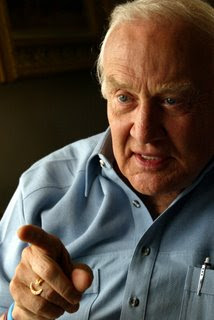
We met Mr. ‘Man on the Moon’ in
How was the decision made once the Eagle landed, who was going to walk first? Did you ever think: ‘I wish I could have been the first man on the moon?’
No! It was clear months ago what we were going to do. Neil was our commander and had been treated in some other areas we had not been. That is why it was quite normal that he was the first man on the moon.
This should not be a problem anyway. Your photos on the moon became the symbol of this historical step!
Ah, yes. Things like this happen in life! (smiling)
What did you feel just as you stepped on the moon? Did you feel fear?
Fear shadows your logic. So, I did not. We were prepared for all possible scenarios. We were even very happy, making jokes. I recall now when we were getting ready to leave the moon,
Why do you think the Russians could not go to the Moon either before or after the
They had two programs that were competing somewhat with each other. They had also lost their main leader, Sergeri Korolov, the father of the Russian Space Program. Those reasons made it very difficult and once we had succeeded, they tried to keep their big rocket going, but then they switched to the story that they did not to intend to go to moon. They did not want to be second. They lost their motivation… at least in their political leadership…
If the
I think we would have continued to try! Depending on what the event was, we would have reacted in some appropriate way to continue on… To suppose, hypothetical failure without specifying exactly what it was, it is hard to cover every case. Someone may ask me what we would have done if we did not take off from the moon. Well, we would continue to work on and fix whatever the problem was. So, we could lift off! (smiling)
What would have changed in history if the Russians had stepped on Moon before you? Would we be living in a different world?
Let me answer that in another way by saying I believe that the success we had by landing on the moon first was the beginning of a realization by the leadership that when
What do you feel when you hear the conspiracy theories claiming man never went to the moon? What do you think lies behind this?
 I don’t pay much attention! I feel sorry for the people who are gullible enough to believe this. I feel disgusted at the people who are propelling themselves at the expense of not knowledgeable… or people who are uncertain and swayed by the ironies, arguments… This is a time in human progression when we deal with precision… we have people better dealing with non-precision. They believe in astrology, not astronomy. They believe the position of the planets at the instant they were born determines their lives. There is nothing that says this is true, but that is an interesting conversation. But it has no basis with truth. It is as we call it ‘old wive’s tales.’ They have nothing better to talk about.
Do you think the super power status of the
Certainly. We came out of World War II, the winners and a new period of time began when we felt responsible for the rest of the people living in other parts of the globe. The intension of the Russians, that were making atomic weapons, hydrogen bombs and seemed determined to spread Communism, was clear: World domination. So they also attempted to do something in space and technology. Not to respond to
What is your personal view of President Kennedy? Do you think he played an important role in
He was a very charismatic individual and he spoke very well, he spoke clearly and with force, and the impact of his challenge, to go to the moon, to continue to the last and to resonate thus even today. We chose to do this exactly not because they are easy, but because they are hard. That is a challenge to every person in their lives, to do the best they can in whatever they face. That is enduring. Had he not been assassinated, his political statute probably would have come down some. Where as the vision, the myth of Kennedy, the charisma and Camelot remained and was not tarnished by Southeast Asian activities and the Vietnam War as subsequent presidents’ were… So, he remains an icon of challenge and success despite the fact that it occurred not in president Jonhson’s term, but in president Nixon’s term…
What did you feel first when you heard Yuri Gagarin became the first man in space? Were you dreaming to be an astronaut then?
No, I was in
There are two different approaches to the Space Exploration Missions in the
I wonder what those people think about why the Chinese, the Russian and the Europeans prefer to send humans into Space or who is going to decide about that? In the end, we set our goals and we definitely know that as long as people support that sending humans into Space is the most effective and efficient method. It is interesting… sometimes people ask ‘why don’t you go to the Moon again?’ Our purpose is not to invade or colonize the Moon. With this mission, we proved that human beings can go to the Moon and come back to the Earth safely and also we searched for an answer for what else can be done afterwards.
You have money, fame and power. What motivates you to write books about Space?
I am definitely not rich. You can be sure that there are many people richer than me here (smiling by showing the yachts around
Have you bought your ring from

No. I ordered it to be made in
Not even a small piece?
No. First of all, the things we brought back from the Moon belong to all humanity not to
Was it given to someone from
I am not sure; but I think it was. We visited your President in
Now you dedicated yourself to Space Tourism. Would you like to tell us about your vision?
Yes. I founded a company for that: ShareSpace. I am optimistic about it. The desire for people to go to the Space even for 5 minutes, to feel the gravity-free environment and to understand the universe we are in is really exciting me… As you know, a short while ago Globalflyer, the first civil spacecraft, actually managed to go out of the atmosphere and to come back. Three or four person trips will start soon. But I want more… I want people to go into Space, to orbit around the world a few times, even to stay there for 24 hours and then come back to where they took off. And I also want people with a low income to be able to do that not only rich people. Only then can we talk about real space tourism. Besides, people are paying taxes to carry out Space Exploration Programs. If they are paying for that, why should they lack this pleasure!
Some people think that spending money for Space Exploration is waste of money, referring to the big problems that humanity faces such as poverty, disease, and poor education…
Trust me; the budget for Space Exploration wouldn’t be enough to wipe out any of these problems. But it is enough to just look at the technologies we use today to see what we gained from these researches.
When is mankind going to step on a new planet, for instance Mars?
Of course when we are ready! First of all, it is necessary to complete the International Space Station and to develop the Space Shuttle Program. I estimate that we can travel to Mars between approximately 2025 and 2030. But unfortunately, I don’t think I will be able to see that. We should go to Mars; we have to do that to create new residential areas apart from the world.
Why? Is there not enough space in the World?

There is only one World. But the World plus somewhere else... it will be different! We should go to Mars and not only go to Mars; furthermore, we should create the conditions for life there. Let’s say the World was destroyed somehow! There will be a place where we can make a new start at least. There is always such a threat. For instance, last year we discovered an asteroid 100 meters in diameter. We estimated that it would hit the World in 2029, but in last autumn, we calculated that it would probably just pass by. There is a possible threat in 2060 as well. If it hits the World, tsunami waves of 60 meters may destroy
When people look at the Moon with their loved ones, they usually have thoughts and feelings of romance. What about you? How do you feel?
I bet they remember us alongside the romanticism! What we did was extraordinary and incredible. And whatever they say, it was for the benefit of humanity. Whenever I look at the Moon, I say to my self that ‘I did a great job!’ As most of the people, I could have studied at Harvard, become a lawyer, earned lots of money, and bought yachts. But this is my choice. I felt that I could have been more useful to my country in this way as a pilot, an engineer and an astronaut.
Photos by: Mustafa Kirazlı
09 August 2005, Tuesday, ZAMAN Daily, İstanbul
Ali Çimen
Click here to read the interview on Zaman Daily
Click here to see the interview as newspaper format, part 1
Click here to see the interview as newspaper format, part 2
Kaydol:
Kayıtlar (Atom)